
Saturday, May 22, 2010
Freak Angels
Superboyprime at Scans Daily posted a link to Warren Ellis' Freak Angels. Freak Angels is an online free comic I have been following for a few months now. I just thought I would mention it. This week would be an excellent time to jump on, although to really enjoy the story I would highly recommend starting at the beginning.


Tuesday, May 11, 2010
Frank Frazetta, RIP
When I was very young, my Dad would sometimes take me to work with him. He worked for the advertising firm Campbell and Ewald (you may have heard of them in the news recently, they lost the Chevrolet account) as a graphic artist. Going to work with my Dad was an awesome experience. He had every single color imaginable in magic markers and colored pencils. It was my first exposure to a Xerox machine and I would spend all day making dozens of copies of my drawings and sitting in some corner of his office coloring all day long.
In his office my Dad had some choice art framed on the walls. He had a print from Erte of the alphabet, and he had two works from artist Frank Frazetta. It was my first exposure to the man’s art and both were very dark and almost disturbing. One was of a demonic centaur-type creature with a nude woman riding on his back (for a kid in single digit years this was probably my first exposure to a nude woman. If you are wondering how Dad could get away with hanging such a thing on his office wall, well, all I can say is the seventies was a very different time).
The second print was The Death Dealer, a menacing figure whose face was hidden in the dark depths of his helm, eyes glowing a demonic red, sitting astride a war horse, his huge axe dripping gore. This, to me, was awesome stuff. Of course it was far, far cooler than the nude chick.
A couple years later I found my Dad’s collection of Conan paperbacks, and on them were the works of Mister Frazetta. I have Frank Frazetta (and my Dad) to thank for my first forays into fantasy literature. While kids these days first cut their teeth on Harry Potter and his adventures reciting bad Latin, I was reading the tales of a brooding Cimmerian as he cut a bloody swath across the page.
I am not exaggerating when I say when Frank Frazetta died part of my childhood died with him.
Thank you, Mister Frazetta, for haunting my imagination with your dark imagery, and for your in part inspiring me to enter the realms of Robert E. Howard. You are much appreciated and you will be missed.
If you wish to see some of Frazetta's work, head over to this link.
In his office my Dad had some choice art framed on the walls. He had a print from Erte of the alphabet, and he had two works from artist Frank Frazetta. It was my first exposure to the man’s art and both were very dark and almost disturbing. One was of a demonic centaur-type creature with a nude woman riding on his back (for a kid in single digit years this was probably my first exposure to a nude woman. If you are wondering how Dad could get away with hanging such a thing on his office wall, well, all I can say is the seventies was a very different time).
The second print was The Death Dealer, a menacing figure whose face was hidden in the dark depths of his helm, eyes glowing a demonic red, sitting astride a war horse, his huge axe dripping gore. This, to me, was awesome stuff. Of course it was far, far cooler than the nude chick.
A couple years later I found my Dad’s collection of Conan paperbacks, and on them were the works of Mister Frazetta. I have Frank Frazetta (and my Dad) to thank for my first forays into fantasy literature. While kids these days first cut their teeth on Harry Potter and his adventures reciting bad Latin, I was reading the tales of a brooding Cimmerian as he cut a bloody swath across the page.
I am not exaggerating when I say when Frank Frazetta died part of my childhood died with him.
Thank you, Mister Frazetta, for haunting my imagination with your dark imagery, and for your in part inspiring me to enter the realms of Robert E. Howard. You are much appreciated and you will be missed.
If you wish to see some of Frazetta's work, head over to this link.
Saturday, May 8, 2010
Making your pitch, setting your tone
One important aspect of your game is the tone. Is it a light hearted comedy? Four colored comic book action? Batman style gritty realism? Generating a tone and adhering to it are both very important, and equally important is conveying to potential players up front what that tone will be.
Personally, I think the worst tone possible is a depressing, post-apocalyptic setting, or one in which the players are up against unwinnable odds, or playing in some other environment that is horrifically depressing. The best example of this that I can think of are the White Wolf games Vampire, Werewolf, Mage, etc. In them you play characters who are either in terrible situations (i.e. undead) or are fighting against opponents that cannot be beaten. In Mage, for example, your primary opponent is The Technocracy. The Technocracy rules the world behind the scenes, there is no beating them. Nothing you can do in the long run can overwhelm The Technocracy because they employ a kind of magic called Science that is powered upon a fundamental belief that science works. The more people who believe in Science, the more powerful it is. So guess what, mage; you live in a world that cannot possibly be changed in any meaningful way.
If you play Werewolf do you think you are going to be able to defeat The Wyrm? Think again. Vampire? Well, Vampire has a sort of cult following all its own. At least it did when I was in college when LARPers took it over and got to dress up in black and role play the undead making and breaking political alliances. Vampire might be the one exception in the White Wolf series because instead of their being an obvious major villain, the players themselves were villains (you know, for being undead blood suckers).
The point is, though, that when players are confronted with a world where they are pitted against an unbeatable foe, it can be pretty daunting. It is like my dislike of X-Men games. With X-Men games the opponent is the Federal government, mutant hunting agencies, racist groups, mutant terrorists, etc. There is no winning here. Your character is trapped in a nightmare world and the best they can hope for is to have a mattress to sleep on underground somewhere, hiding from hoards of racists bastards out to kill them because they are prettier than they are (ninety nine out of a hundred mutants are beautiful. It is the rare player willing to run the sort of freak of nature that would cause riots).
Your game does not always have to maintain the same tone. Perhaps you want to run a series of adventures with a humorous bent, or you wish to introduce more romantic elements. The tone is in part inspired by the players themselves as you strive to keep them entertained. For example, a player may wish his character to form a romantic bond with an NPC, if so then role play that out with them. Even if your game is not romance based it certainly does not hurt to have a romantic element to it, provided it is done in a tasteful manner and adheres to the rating system you and your players are comfortable with (I have always gone for a PG-13 rating in my games, although when it comes to gory elements I have slipped into "R" territory. But when it comes to sex, fading to black works best for both myself and my players). Sometimes a game needs to be shaken up a bit to keep it fresh, keep players interested. Do not be afraid to change up the tone a bit if you or your players are getting bored. Just bear in mind that if your players signed up for one sort of game and you start delivering another they may quit on you. Discuss dramatic changes with your players before you initiate them.
What about humor, you may ask? Funny is hard, and I cannot imagine any game that can be long sustained on it. All the same, I think a little humor never hurts. Some of Star Trek's greatest moments were funny ones (The Trouble With Tribbles, Trials and Tribbleations are just two examples). Just don't be surprised if your jokes fall flat, and do not take it personally if your players do not find them funny.
So when you design your game, think long and hard about the world you are creating. Do you really want to deliver an environment in which your PCs can have no impact whatsoever? A world where they are against unstoppable forces? A place where they are at best government stooges, at worst outlaw vigilantes with a price on their heads? Consider carefully what you deliver. My game has lasted over eight years in part because the tone I have provided is at times gritty, other times humorous. A place where sometimes the heroes do come across larger than life and make a difference in the world.
Personally, I think the worst tone possible is a depressing, post-apocalyptic setting, or one in which the players are up against unwinnable odds, or playing in some other environment that is horrifically depressing. The best example of this that I can think of are the White Wolf games Vampire, Werewolf, Mage, etc. In them you play characters who are either in terrible situations (i.e. undead) or are fighting against opponents that cannot be beaten. In Mage, for example, your primary opponent is The Technocracy. The Technocracy rules the world behind the scenes, there is no beating them. Nothing you can do in the long run can overwhelm The Technocracy because they employ a kind of magic called Science that is powered upon a fundamental belief that science works. The more people who believe in Science, the more powerful it is. So guess what, mage; you live in a world that cannot possibly be changed in any meaningful way.
If you play Werewolf do you think you are going to be able to defeat The Wyrm? Think again. Vampire? Well, Vampire has a sort of cult following all its own. At least it did when I was in college when LARPers took it over and got to dress up in black and role play the undead making and breaking political alliances. Vampire might be the one exception in the White Wolf series because instead of their being an obvious major villain, the players themselves were villains (you know, for being undead blood suckers).
The point is, though, that when players are confronted with a world where they are pitted against an unbeatable foe, it can be pretty daunting. It is like my dislike of X-Men games. With X-Men games the opponent is the Federal government, mutant hunting agencies, racist groups, mutant terrorists, etc. There is no winning here. Your character is trapped in a nightmare world and the best they can hope for is to have a mattress to sleep on underground somewhere, hiding from hoards of racists bastards out to kill them because they are prettier than they are (ninety nine out of a hundred mutants are beautiful. It is the rare player willing to run the sort of freak of nature that would cause riots).
Your game does not always have to maintain the same tone. Perhaps you want to run a series of adventures with a humorous bent, or you wish to introduce more romantic elements. The tone is in part inspired by the players themselves as you strive to keep them entertained. For example, a player may wish his character to form a romantic bond with an NPC, if so then role play that out with them. Even if your game is not romance based it certainly does not hurt to have a romantic element to it, provided it is done in a tasteful manner and adheres to the rating system you and your players are comfortable with (I have always gone for a PG-13 rating in my games, although when it comes to gory elements I have slipped into "R" territory. But when it comes to sex, fading to black works best for both myself and my players). Sometimes a game needs to be shaken up a bit to keep it fresh, keep players interested. Do not be afraid to change up the tone a bit if you or your players are getting bored. Just bear in mind that if your players signed up for one sort of game and you start delivering another they may quit on you. Discuss dramatic changes with your players before you initiate them.
What about humor, you may ask? Funny is hard, and I cannot imagine any game that can be long sustained on it. All the same, I think a little humor never hurts. Some of Star Trek's greatest moments were funny ones (The Trouble With Tribbles, Trials and Tribbleations are just two examples). Just don't be surprised if your jokes fall flat, and do not take it personally if your players do not find them funny.
So when you design your game, think long and hard about the world you are creating. Do you really want to deliver an environment in which your PCs can have no impact whatsoever? A world where they are against unstoppable forces? A place where they are at best government stooges, at worst outlaw vigilantes with a price on their heads? Consider carefully what you deliver. My game has lasted over eight years in part because the tone I have provided is at times gritty, other times humorous. A place where sometimes the heroes do come across larger than life and make a difference in the world.
Wednesday, May 5, 2010
Just a note...

Kate Bush is on the cover of the June issue of Britain's Uncut magazine. A substantial part of the article is focused on Kate's fifth album, Hounds of Love, as it's 25th anniversary approaches.
And Jesus Christ I suddenly feel old.
Hounds of Love is my favorite album, edging out Styx's Pieces of Eight, Rob Zombie's Hillbilly Deluxe, Garbage's debut album, Billy Squire's Don't Say No, Tori Amos' Little Earthquakes and the soundtrack to Star Trek II, The Wrath of Khan (I am not necessarily huge fans of these artists. I just think those are some awesome albums, with a terrific collection of songs), I keep coming back to it. It is comprised of two parts. Side A contains four marketable hit songs: Running Up That Hill, Hounds of Love, The Big Sky and Cloudbusting, along with Mother Stands For Comfort. Side B is called The Ninth Wave, essentially a concept album chronicling the tale of a woman stranded, floating in the ocean, drifting in and out of consciousness. The album showed that Kate had learned from the errors made on her fourth album, that to succeed as an artist you must make compromises between the sometimes hard to understand, possibly even unapproachable art that only hardcore fans might appreciate with the demands of the market that allow an artist to thrive. Hounds Of Love's hit singles are by no means bad songs (I love all four) but in recording them along with her concept album Kate showed a very clear understanding of the market and the realities by which she had to live.
Also of note, at the time Kate was recording the fourth album The Dreaming she had to rent time from various studios, which meant she could not always record when she felt like it. Deciding that lack of freedom curtailed her creative energies, she invested in building her own studio, which allowed her near complete freedom. In the end Hounds of Love is a stronger album than The Dreaming, both commercially and creatively (some Kate Bush fans argue The Dreaming is the better album. I respectfully disagree.).
Creatively, I think Hounds of Love is Kate's high water mark, creatively. I still love her later albums (The Sensual World, The Red Shoes, Aerial) but Hounds is better than all three. If you are interested in getting to know Kate's work, I suggest you start with The Whole Story, her greatest hits album, or Hounds. And if you are damn lucky (like me), purchase the Hounds of Love EMI 100th anniversary edition with all the extra B sides.
Saturday, May 1, 2010
A question for Harry Potter fans...
I admit I am not a big fan of the Potterverse so I am not well versed in the intricacies of the seven books. I have seen the six movies so I have some idea what is going on. One question plagues me about the whole thing:
Why doesn't anyone just shoot Voldemort?
I mean really, with all the bad latin and spell casting going around I would think you could unload a couple rounds into the bad guy's head before he got his first wand-wave off. Is there some sort of mystic code preventing wizards from being practical? Is it just a British thing and only American children would consider the advantages of packing heat? Are sorcerers incapable of figuring out how a trigger mechanism works?
I am no great fan of Jim Butcher's Dresden Files but at least the principle character often tries to have a smoke wagon on hand in the event his power reserves are low or he is without wand and staff. Harry Dresden is practical like that.
I just think the Death Eaters would be a lot less scary in the face of Armalites and AKs, thassall...
Why doesn't anyone just shoot Voldemort?
I mean really, with all the bad latin and spell casting going around I would think you could unload a couple rounds into the bad guy's head before he got his first wand-wave off. Is there some sort of mystic code preventing wizards from being practical? Is it just a British thing and only American children would consider the advantages of packing heat? Are sorcerers incapable of figuring out how a trigger mechanism works?
I am no great fan of Jim Butcher's Dresden Files but at least the principle character often tries to have a smoke wagon on hand in the event his power reserves are low or he is without wand and staff. Harry Dresden is practical like that.
I just think the Death Eaters would be a lot less scary in the face of Armalites and AKs, thassall...
Saturday, April 24, 2010
Crisis, Quest, Mentor
So, you have decided what sort of game you want to run. You have the genre, you have the method of communication, you have the database. You have advertised and you have players, they have characters you approve of.
So, what is next? You have to get the band together.
Having the PCs meet can be simple or complex, but to insure the game gets off on the right foot it should at least be interesting. Some settings make this very easy. In this article I will explore some of the different game settings and the various way players may meet and begin their adventures.
Star Trek is probably the simplest of all. Everyone works for Starfleet or are in some way associated with them, or have some valid reason to be on a Federation vessel, it is just a matter of them meeting the captain, saying “hello!” and moving on with making introductions to the rest of the gang. While that is a nice, safe way to go, it probably mirrors how 99% of Star Trek games begin. How can you shake things up?
One way to do it is to suggest many of the crew already know one another. Talk to the players, see who wishes to know whom and how. Have some of the crew already serving on board. While some ‘Trek games assume the ship still has that brand new smell, odds are the vessel should already be in service and the PCs are coming on board as replacements.
And there is an awesome hook; replacements. Why have so many new officers been assigned this ship? Have the old officers been killed in action? Or were they arrested for mutiny? Will the crew trust the replacements? Perhaps the captain was the former XO and is in many ways as untried as the officers he now commands. An environment of distrust and uncertainty might be an interesting way to start things off.
When I ran my first Star Trek game, Lionheart, it was during the Dominion war. Lionheart was a beaten up Sabre class vessel, it’s crew a combination of shell shocked survivors as well as those being ferried back to Earth for reassignment. Lionheart was destined for scrap upon her arrival, her officers along mostly for the ride, to keep things together for that long.
And of course, things did not work according to plan. Lionheart got sucked into a future where the Dominion won the war, and Lionheart was somehow responsible. The crew’s mission was to discover what they had done wrong and to go back in time to fix it, and I consider myself very, very fortunate to have been blessed with a batch of players who made that first game rock. And it began in part because the adventure hook went beyond simply a bunch of new officers coming on board.
Another genre is fantasy. When I used to play Dungeons & Dragons the PCs first meeting in a tavern became a tired cliché that could cause many eyes to roll. It was boring. But why would such a gang of diverse characters be together? What would a fighter have in common with a mage? Why would a paladin sully his good name being seen in public with a suspected thief?
Again, this is where the crisis can come in. In one game I played the GM had this town attacked by an outside force. Everyone in tow-the PCs included-were charmed and chained. An opposing force broke the spell and in the battle the PCs-chained ankle to ankle, had to work together to escape. It fell apart when Herb decided his character wanted to strike off on his own, but I think he was just doing that to be a dick. Point was, the GM thought outside the box, decided to create a crisis to form a bond.
I used to game with a guy named Chuck, and Chuck was the sort of GM who did not plan very far ahead. Every game he started began with the group waking up in their underwear, often imprisoned, which really sucked for the players whose characters were dependent on big guns or the like. It got so no one wanted Chuck to run things any more. However, his method did have the benefit of getting the gang motivated.
When I ran a D & D game I used an attack on the caravan the players were part of to create the crisis. The survivors had to flee the orcs, had to reach a town some miles away. There was safety in numbers and along the way, if friendships were not made at least a respect for everyone’s respective talents.
Sometimes the crisis does not have to be so immediate. I ran another game much later, when 3rd Edition came out. In this the players were the apprentices and squires of powerful adventurers on a quest. They were the heroes of tomorrow learning from the heroes of today. While on the quest they were left behind to watch the horses and mind the camp as their mentors went off to inspect some castle ruins. A day went by and the heroes did not return. Then two. By the third, the young adventurers knew something had befallen their teachers.
Now they had to step up and not only complete the quest, but they also had to discover the mystery of their mentors’ disappearance. This was an excellent way to get the gang some starting magic gear:
“This is Eveningsong’s Elven cloak! Why would she hide it here in the hollow of this tree? Look, a note is pinned to it, a clue!”
Which brings me to the other classic fantasy adventure hook: the Quest. The Quest is a fine idea, but if given a choice, I will take the crisis over The Quest every time. The crisis gives a more action packed start and also gives the players a more immediate, tangible motivation. If The Quest is used, then I think a twist needs to be added to it, like the one I mentioned above.
Which is not to say I would rule out The Quest entirely. An example of a good quest hook might be the various players each possess a piece of a map, and together they can use it to uncover a hidden treasure. Such a map could be pieces of paper, or the lines of a riddle, or as they did in a Star Trek episode, lines of DNA discovered on different planets. In Star Trek (or another sci-fi setting) the PCs receive haunting dreams and feel compelled to gather together. Starfleet assigns them to a single vessel (Does it even have to be a ship they are on? Why not have them act as passengers instead, a strike force ferried from place to place. (Alternate Star Trek adventure ideas will be discussed in a later article). Who is sending the dreams and why? Are they a warning, and if so, of what?
And this segues into another potential plot hook; the mentor.
In Shadowrun he was known as “Mister Smith”, the guy who provided the team their missions. Gandalf in Lord of The Rings might be considered such, to an extent. When I began my Vindicators game the team was assembled by Marion Bradley, executor of the Margaret Ashe Foundation, which was bank rolling the team. It is a quick and effective way of starting things off, although it can be a bit boring. But sometimes boring is okay if the players trust you and when I started The Vindicators many of the players already knew me well enough to roll with it. And boring might be the way to go if your players are as inexperienced as you are. Vanilla can be a tasty flavor as well.
The mentor might not be a benign force. What if the gang were brought together to participate in some sort of death match by the game’s main villain? What if it were some sort of contest of champions set up by cosmic forces? This idea can work in almost any setting, even Star Trek. In The Savage Curtain Kirk and Spock were forced to fight in order to see which was stronger, good or evil.
No doubt I have missed many examples, but I think I covered the general categories: crisis, quest, mentor. In each case I have illustrated some examples but like I said, it is far from an exhaustive list. Whatever you choose, just bear in mind the choice is may have an impact on the rest of your game. Remember; once you have seen someone else in their underwear, you never look at them the same way again…
So, what is next? You have to get the band together.
Having the PCs meet can be simple or complex, but to insure the game gets off on the right foot it should at least be interesting. Some settings make this very easy. In this article I will explore some of the different game settings and the various way players may meet and begin their adventures.
Star Trek is probably the simplest of all. Everyone works for Starfleet or are in some way associated with them, or have some valid reason to be on a Federation vessel, it is just a matter of them meeting the captain, saying “hello!” and moving on with making introductions to the rest of the gang. While that is a nice, safe way to go, it probably mirrors how 99% of Star Trek games begin. How can you shake things up?
One way to do it is to suggest many of the crew already know one another. Talk to the players, see who wishes to know whom and how. Have some of the crew already serving on board. While some ‘Trek games assume the ship still has that brand new smell, odds are the vessel should already be in service and the PCs are coming on board as replacements.
And there is an awesome hook; replacements. Why have so many new officers been assigned this ship? Have the old officers been killed in action? Or were they arrested for mutiny? Will the crew trust the replacements? Perhaps the captain was the former XO and is in many ways as untried as the officers he now commands. An environment of distrust and uncertainty might be an interesting way to start things off.
When I ran my first Star Trek game, Lionheart, it was during the Dominion war. Lionheart was a beaten up Sabre class vessel, it’s crew a combination of shell shocked survivors as well as those being ferried back to Earth for reassignment. Lionheart was destined for scrap upon her arrival, her officers along mostly for the ride, to keep things together for that long.
And of course, things did not work according to plan. Lionheart got sucked into a future where the Dominion won the war, and Lionheart was somehow responsible. The crew’s mission was to discover what they had done wrong and to go back in time to fix it, and I consider myself very, very fortunate to have been blessed with a batch of players who made that first game rock. And it began in part because the adventure hook went beyond simply a bunch of new officers coming on board.
Another genre is fantasy. When I used to play Dungeons & Dragons the PCs first meeting in a tavern became a tired cliché that could cause many eyes to roll. It was boring. But why would such a gang of diverse characters be together? What would a fighter have in common with a mage? Why would a paladin sully his good name being seen in public with a suspected thief?
Again, this is where the crisis can come in. In one game I played the GM had this town attacked by an outside force. Everyone in tow-the PCs included-were charmed and chained. An opposing force broke the spell and in the battle the PCs-chained ankle to ankle, had to work together to escape. It fell apart when Herb decided his character wanted to strike off on his own, but I think he was just doing that to be a dick. Point was, the GM thought outside the box, decided to create a crisis to form a bond.
I used to game with a guy named Chuck, and Chuck was the sort of GM who did not plan very far ahead. Every game he started began with the group waking up in their underwear, often imprisoned, which really sucked for the players whose characters were dependent on big guns or the like. It got so no one wanted Chuck to run things any more. However, his method did have the benefit of getting the gang motivated.
When I ran a D & D game I used an attack on the caravan the players were part of to create the crisis. The survivors had to flee the orcs, had to reach a town some miles away. There was safety in numbers and along the way, if friendships were not made at least a respect for everyone’s respective talents.
Sometimes the crisis does not have to be so immediate. I ran another game much later, when 3rd Edition came out. In this the players were the apprentices and squires of powerful adventurers on a quest. They were the heroes of tomorrow learning from the heroes of today. While on the quest they were left behind to watch the horses and mind the camp as their mentors went off to inspect some castle ruins. A day went by and the heroes did not return. Then two. By the third, the young adventurers knew something had befallen their teachers.
Now they had to step up and not only complete the quest, but they also had to discover the mystery of their mentors’ disappearance. This was an excellent way to get the gang some starting magic gear:
“This is Eveningsong’s Elven cloak! Why would she hide it here in the hollow of this tree? Look, a note is pinned to it, a clue!”
Which brings me to the other classic fantasy adventure hook: the Quest. The Quest is a fine idea, but if given a choice, I will take the crisis over The Quest every time. The crisis gives a more action packed start and also gives the players a more immediate, tangible motivation. If The Quest is used, then I think a twist needs to be added to it, like the one I mentioned above.
Which is not to say I would rule out The Quest entirely. An example of a good quest hook might be the various players each possess a piece of a map, and together they can use it to uncover a hidden treasure. Such a map could be pieces of paper, or the lines of a riddle, or as they did in a Star Trek episode, lines of DNA discovered on different planets. In Star Trek (or another sci-fi setting) the PCs receive haunting dreams and feel compelled to gather together. Starfleet assigns them to a single vessel (Does it even have to be a ship they are on? Why not have them act as passengers instead, a strike force ferried from place to place. (Alternate Star Trek adventure ideas will be discussed in a later article). Who is sending the dreams and why? Are they a warning, and if so, of what?
And this segues into another potential plot hook; the mentor.
In Shadowrun he was known as “Mister Smith”, the guy who provided the team their missions. Gandalf in Lord of The Rings might be considered such, to an extent. When I began my Vindicators game the team was assembled by Marion Bradley, executor of the Margaret Ashe Foundation, which was bank rolling the team. It is a quick and effective way of starting things off, although it can be a bit boring. But sometimes boring is okay if the players trust you and when I started The Vindicators many of the players already knew me well enough to roll with it. And boring might be the way to go if your players are as inexperienced as you are. Vanilla can be a tasty flavor as well.
The mentor might not be a benign force. What if the gang were brought together to participate in some sort of death match by the game’s main villain? What if it were some sort of contest of champions set up by cosmic forces? This idea can work in almost any setting, even Star Trek. In The Savage Curtain Kirk and Spock were forced to fight in order to see which was stronger, good or evil.
No doubt I have missed many examples, but I think I covered the general categories: crisis, quest, mentor. In each case I have illustrated some examples but like I said, it is far from an exhaustive list. Whatever you choose, just bear in mind the choice is may have an impact on the rest of your game. Remember; once you have seen someone else in their underwear, you never look at them the same way again…
Tuesday, April 13, 2010
Bad Cop
When running a game a time is going to come along when you and one or more players are going to butt heads. You are going to disagree on subjects, or receive criticism. One player may make a disparaging comment about another.
Let me say this right now; the advice I give here I have not always followed. I am short tempered, I have made mistakes. I have done things I am not proud of and have been frankly embarrassing. So before anyone checks out posts in my Vindicators game and call me a hypocrite, I just want to state I believe in what I say here, I just do not always follow my own advice. I am fallible.
Now, on to the advice.
First of all, if a player butts heads with you, do not lose your temper. It is just a game. Yes, it is your game, but it is still just a past time you are not being paid to. Keep it in perspective. If he insults you, if he criticizes your GMing style, if he finds fault with your game, follow Dalton's advice and be nice.
Take a breath. Walk away from the computer. Take a day off and think about what you want to do. You are not going to make any good decisions with your blood up. Whatever you do is going to have consequences for you, the player, and the game.
Here are your options. Bear in mind these options will be colored by your relationship with the player and the severity of his actions. One thing I can insist on is to take the conversation off the board, make it private with the player.
If he has insulted another player, then politely insist he/she apologize publicly. There can be no compromise on this. Players must feel as if they can rely on you, depend on you, and that means you standing up for them by standing up to a potential 'net bully. If he has insulted you then whether or not you want a public apology is up to you.
If he has criticized your game, consider what he has said. Maybe he is right. Maybe he has a point. Maybe you do need to change some aspect of the game. If so then you might want to make it a public forum.
However, if he has just come out and said your game sucks without giving a valid reason, then privately ask him up front if he wants to quit. Find out what is wrong, both with the game and perhaps about his private life. Sometimes real life stress causes people to say things they do not mean.
In the end, firing a player must always be an option you should entertain. The quality of their play, the length of time they have gamed with you, their "real world" friendship are all factors you must take into account. But some guys just need to go.
Let me say this right now; the advice I give here I have not always followed. I am short tempered, I have made mistakes. I have done things I am not proud of and have been frankly embarrassing. So before anyone checks out posts in my Vindicators game and call me a hypocrite, I just want to state I believe in what I say here, I just do not always follow my own advice. I am fallible.
Now, on to the advice.
First of all, if a player butts heads with you, do not lose your temper. It is just a game. Yes, it is your game, but it is still just a past time you are not being paid to. Keep it in perspective. If he insults you, if he criticizes your GMing style, if he finds fault with your game, follow Dalton's advice and be nice.
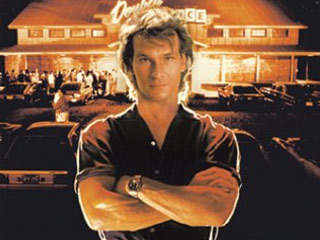
Take a breath. Walk away from the computer. Take a day off and think about what you want to do. You are not going to make any good decisions with your blood up. Whatever you do is going to have consequences for you, the player, and the game.
Here are your options. Bear in mind these options will be colored by your relationship with the player and the severity of his actions. One thing I can insist on is to take the conversation off the board, make it private with the player.
If he has insulted another player, then politely insist he/she apologize publicly. There can be no compromise on this. Players must feel as if they can rely on you, depend on you, and that means you standing up for them by standing up to a potential 'net bully. If he has insulted you then whether or not you want a public apology is up to you.
If he has criticized your game, consider what he has said. Maybe he is right. Maybe he has a point. Maybe you do need to change some aspect of the game. If so then you might want to make it a public forum.
However, if he has just come out and said your game sucks without giving a valid reason, then privately ask him up front if he wants to quit. Find out what is wrong, both with the game and perhaps about his private life. Sometimes real life stress causes people to say things they do not mean.
In the end, firing a player must always be an option you should entertain. The quality of their play, the length of time they have gamed with you, their "real world" friendship are all factors you must take into account. But some guys just need to go.
Subscribe to:
Posts (Atom)